| Seoul's Buddha-Rock Mountain and Temple: Bulam-san / Bulam-sa |
| NEXT PAGE ---> |
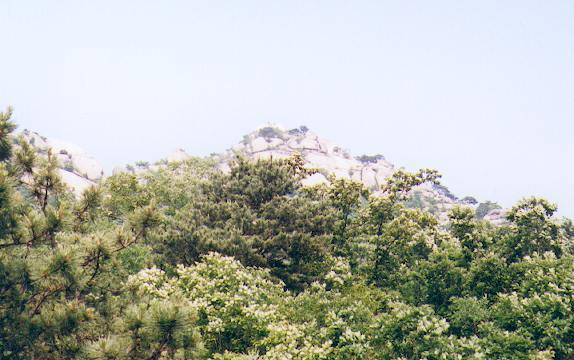
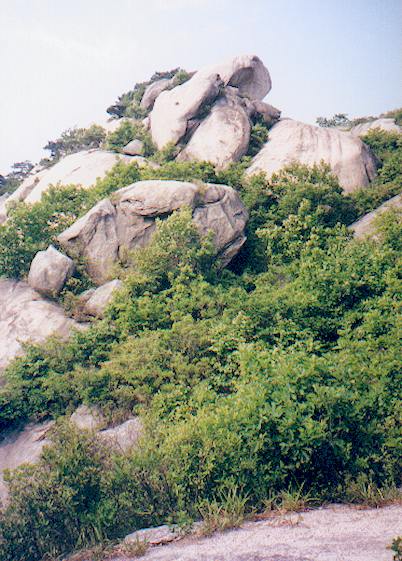
| Bul-am-san [Buddha-Rock Mountain] in far north-eastern Seoul, was named so because its rocky peak, shown here from different angles,was believed to be an enlightened San-shin manifesting into the world. Nine temples and many trails are found on the slopes. |
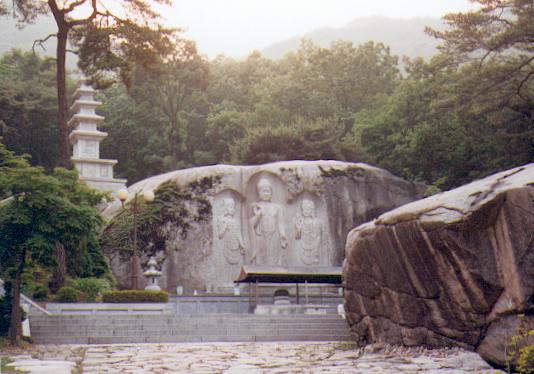
| Bul-am-sa [Buddha Rock Temple] has been located in a deep valley on the southern foot of Bulam-san for a thousand years. For all that time, the idea that the mountain itself, or actually its spirit, is an incipient enlightened being (a Buddha) was enough to ensure its sacred reputation and popular patronage. Full explanation of this concept can be found here. But just in the 1980s, the monks here decided to create a literal manifestation of the theme behind the name, and had this triad (a Buddha and two Bodhisattvas) carved on one of the gigantic boulders resting behind their Main Hall. |
 |
 |
 |
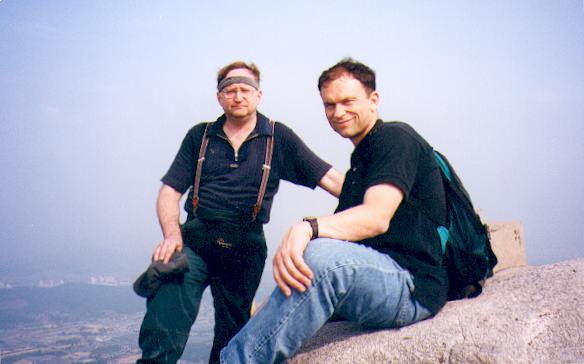
| On the peak of Bulam-san with my old friend and climbing-partner Mark, June 2002. Bulam-san is very steep, and from a distance displays a distinctive pyramid-shape profile. A long ridge to the north connects it to Surak-san. |
 |
 |
 |
 |
 |
 |
 |
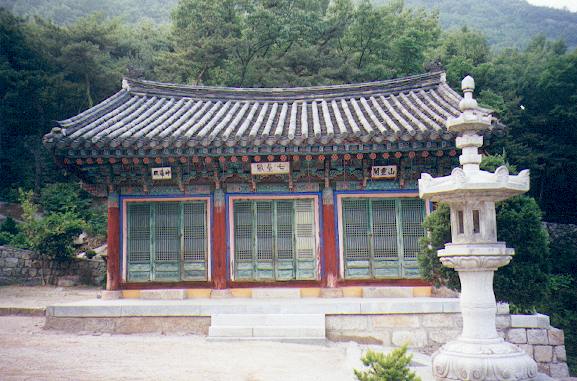
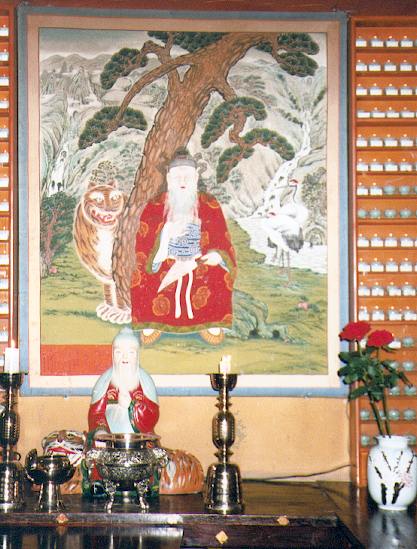
| The large Spirit-hall of Bul-am-sa is unique in all of Korea. The signboard on the right proclaims a San-shin-gak, the one in the center proclaims a Chilseong-gak [Seven Stars (of the big dipper) Shrine], and the one on the left proclaims a Na-han-jeon [Hall for the Arhants, the 16 enlightened disciples of Sakyamuni Buddha]. Shamanist/Daoist deities like the San-shin and Chil-seong are never usually enshrined together with high-ranking Buddhist deities; this is another indication of the modern rise of their status. The stone lantern in front of the San-shin-gak also indicates this. Inside this Spirit-hall, The San-shin painting is quite ordinary, except for the crazy-looking tiger -- a touch of Korea's unique folk-art traditions. |
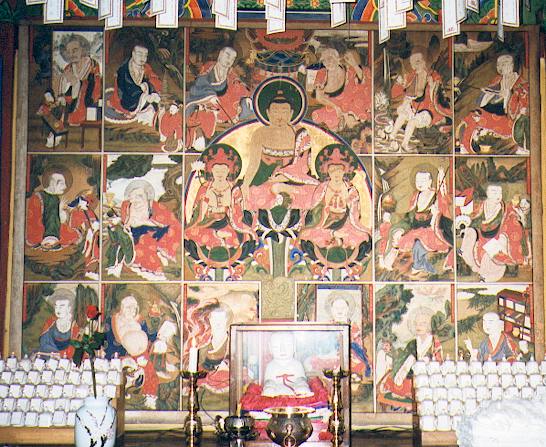
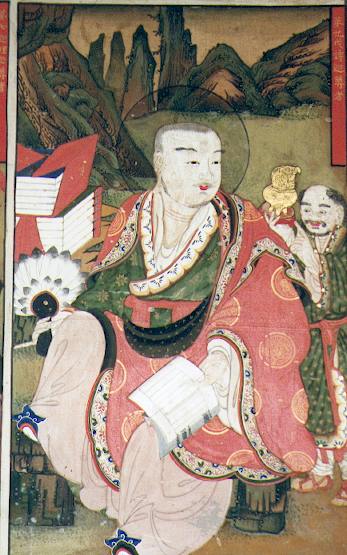
| Inside on the left is an elaborate and excellent montage of paintings of the 16 Nahan or enlightened disciples, with Sakyamuni Buddha and 2 Bodhisattvas in the center. One of them holds a white-crane-feather fan like San-shin often does -- a Chinese Daoist symbol of military command and knowledge of & influence over the forces of Nature. |
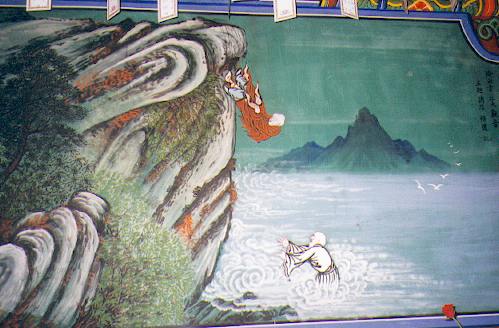
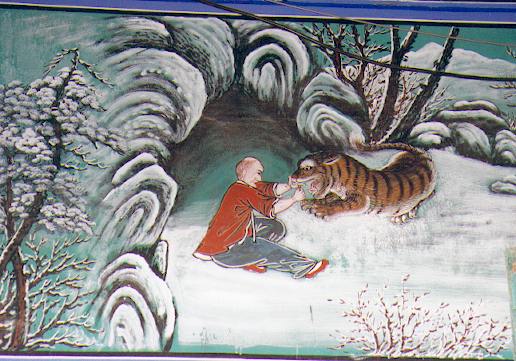
| Painted on the inside walls of that Spirit-hall is a local legend of a virtuous monk falling from a high cliff but being safely caght by a San-shin suddenly appearing from the mists of the valley; a mountain that looks quite like Bulam-san is in the background. Also, an enlightened adept, perhaps one of the disciples, administering dentistry to a tiger outside his wilderness cave -- another Daoist-flavored theme. |